
TL;DR
TL;DR
Key Takeaways:
- Manual citation checking across ChatGPT, Perplexity, Claude, and Gemini consumes 15+ hours/week for a 20-property portfolio and doesn’t scale — agencies need multi-tenant dashboards with normalized cross-engine data.
- Publisher portfolios require tracking paywalled content, geographic engine variants, and topic-cluster dominance — not just brand mentions — because every citation maps directly to ad impressions, subscriptions, or affiliate revenue.
- True white-label means custom domain, zero vendor watermarks, and per-client metric customization; partial white-label (footer badges, locked metrics) undermines premium positioning at scale.
- Volume pricing varies wildly: ZipTie.dev ~$2,400/mo for 25 clients, PeecAI ~$3,750, Profound $4,500 after a 15-client cliff, Otterly.ai $3,000 flat, Scrunch AI $1,200 with 24-month lock — negotiate with a 12-month commit script.
- Translate citations to revenue by weighting engines (Perplexity > Gemini > ChatGPT), mapping to client revenue models, and quantifying competitive gaps — this turns AI visibility from vanity metric into retainer-justifying line item.
Why AI Visibility Tracking Breaks at Agency Scale
Publisher clients watch organic traffic bleed into AI answers that don’t credit them, and they expect agencies to fix it. The problem isn’t whether generative engine optimization matters - it’s that no standardized measurement exists across ChatGPT, Perplexity, Claude, and Gemini, and every engine surfaces citations differently. Based on my experience running evaluations for agencies managing 20-plus publisher properties, the tools built for solo practitioners collapse under multi-client weight because they lack the architecture, pricing models, and integration depth that portfolio work demands.
Most roundups evaluate for single-site operators who care about monthly price and onboarding flow, not API rate limits, white-label purity, or volume pricing tiers. The criteria that determine whether a citation stack actually scales - multi-tenant dashboards, true white-label deliverables, enterprise volume breaks, and programmatic BI integration - get buried under consumer-focused features. Agencies end up stitching together screenshots and manual tallies while tool sprawl grows: one platform for rankings, another for citations, a third for content audits, a fourth for competitive intel, none of them talking to each other.
Junior analysts burn out on repetition, senior leads can’t translate citation counts into the revenue language clients understand, and the whole operation feels held together by spreadsheets and hope. This guide breaks down the 10 criteria that determine whether a citation stack scales, maps how the leading vendors handle multi-client architecture, and includes a two-week trial checklist to pilot before you commit.
Manual Citation Checking Across Four Engines Doesn’t Scale
You know the drill - Monday morning starts with a spreadsheet of publisher domains, four AI engines, and a junior analyst copy-pasting URLs into ChatGPT, Perplexity, Claude, and Gemini one by one, hoping the citations still show up. Hours vanish into that loop, hours your senior strategists should spend on the work clients actually pay for: figuring out why traffic dropped and how to win it back. I’ve watched teams spend 15-plus hours weekly on this manual process across a 20-property portfolio, and the time compounds non-linearly as engines change citation logic quarterly.
The clients notice too. They’re asking for AI visibility reports with the same rigor they expect from rank tracking, except nobody agrees on what a citation even means across engines - ChatGPT counts browsing differently than Perplexity counts sources, and Gemini’s AI Overviews play by their own rules. Your team stitches together disjointed reports while the tool sprawl grows, and no single platform normalizes the data into a comparable view. Without that normalization, you’re comparing apples to oranges when you roll up reports for the client.
This structural gap is why the evaluation criteria in the next section - multi-client architecture, white-label purity, volume pricing, API depth - aren’t nice-to-haves for publisher agencies; they’re the minimum viable feature set for a stack that actually scales across 20-plus properties without burning your team on manual workarounds. The agencies winning renewals are the ones showing up with proprietary dashboards that translate citations into revenue-equivalent metrics, while traditional SEO framing loses pitches before the first slide loads.
Publisher Portfolios Require Different Tooling Than B2B or Ecommerce
Publisher portfolios don’t play by the same rules as B2B SaaS or e-commerce because every citation maps directly to revenue - ad impressions, subscription conversions, affiliate clicks - and on thin margins that citation loss isn’t a vanity metric, it’s a measurable revenue leak that shows up in monthly P&Ls. Most tracking tools only crawl public pages, which means they miss the paywalled and login-gated content that actually drives publisher economics; you’re getting a visibility picture of the free tier while the premium content generating the majority of revenue sits invisible to the dashboard. Topic-cluster dominance matters more than brand mentions here - you need to know which publisher owns “best credit cards” versus “recipe substitutions” across AI answers because that cluster ownership determines who captures the high-intent traffic that converts.
The geographic layer adds another dimension that generic SEO tools ignore entirely: multi-language publisher clients require tracking across regional engine variants like Gemini in the EU, Ernie Bot in China, and Perplexity Pages globally, each with different citation logic and content preferences. A publisher with English, Spanish, and German properties isn’t just running three sites - they’re operating across three different AI ecosystems that surface citations differently, and your tool needs to normalize that data into a single comparable view. I’ve seen agencies lose multi-market clients because their tooling couldn’t handle this normalization, forcing manual workarounds that broke at scale.
This structural difference is why generic “best AI tools” lists fail agency directors managing publisher portfolios. The single-engine focus is the real tell: half the market still sells “ChatGPT citation trackers” that ignore Perplexity, Claude, Gemini, and AI Overviews entirely, which is where publisher citations actually happen. If a tool only monitors one engine, it’s not an agency tool - it’s a blind spot that puts your clients’ revenue at risk.
Clients Are Churning Over Missing AI Visibility Reports
Agencies report that publisher clients are threatening to cut GEO retainers because they cannot see the numbers - this is not a theoretical churn risk, it is happening in pitch rooms today. The agencies winning renewals are the ones showing up with dashboards that translate citations into revenue-equivalent metrics, while traditional SEO framing loses pitches before the first slide even loads. Your clients have already seen competitor proposals labeled “AI-first” and they are asking why their reports still look like 2019 rank trackers.
Building internal tooling feels like control until AI engines change citation logic quarterly and your engineering hours divert from client work to maintenance. I watched a team spend six months on a custom Perplexity tracker only for the engine to shift how it surfaces sources - the whole pipeline broke and the client left anyway. The 20 percent of client pages driving 80 percent of citations stay invisible without automated prioritization, leaving easy wins on the table while you manually check the wrong URLs.
The tool evaluation criteria that matter at scale - multi-tenant dashboards, true white-label deliverables with zero vendor branding, enterprise volume tiers, and API access that plugs into your existing BI stack without engineering debt - get buried under consumer-focused features in every generic roundup. That gap is exactly why the next section breaks down the 10 criteria that separate tools built for this workflow from tools built for demos.
Generic Tool Roundups Miss the Criteria That Matter for Agencies
Most “best AI tools” roundups are written for solo practitioners who care about monthly price and ease of use - they never mention API depth, white-label purity, volume pricing, or multi-client architecture because those criteria don’t exist for a single-site operator. You open a review expecting to learn which tool handles 20 publisher properties across ChatGPT, Perplexity, Claude, and Gemini, and instead get a comparison of dashboard aesthetics and onboarding flow. Pricing opacity wastes more evaluation cycles than any missing feature: every vendor lists “contact sales” with zero volume benchmarks, so you can’t tell if 25 clients costs five hundred a month or five thousand before you book a demo.
The integration claims are equally slippery - “connects to Data Studio” might mean live API sync or it might mean manual CSV export once a month, and the difference determines whether the tool scales or stalls at your first portfolio review. I’ve sat through discovery calls where the rep couldn’t answer whether the price scales per client or per seat, and that ambiguity alone kills the deal. What you actually need is a framework that filters for agency reality first - multi-tenant dashboards, true white-label deliverables, enterprise volume tiers, and API access that plugs into your existing BI stack.
The next section breaks down the 10 criteria that separate scalable citation stacks from expensive toys, adapted from the evaluation framework I use when advising agencies on tool selection. These criteria prioritize the workflow realities of managing 20-plus publisher properties with different revenue models, reporting cadences, and stakeholder approval chains - not the feature checklists that look good in a demo environment.
The 10 Evaluation Criteria That Separate Scalable Stacks from Demos
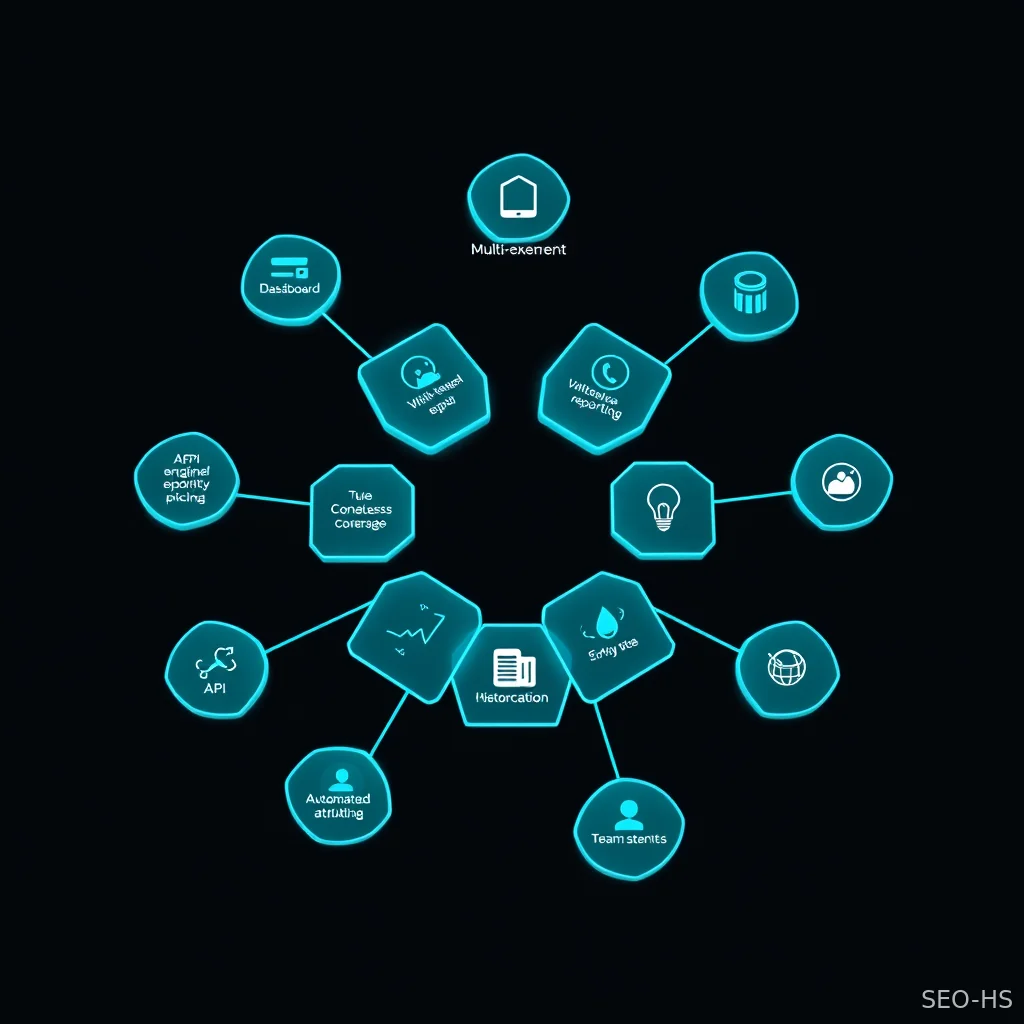
Agency directors managing publisher portfolios need a completely different evaluation lens than solo practitioners - the criteria that determine whether a tool survives contact with 20-plus clients, each with their own revenue model, reporting cadence, and stakeholder approval chain. The 10 criteria that actually separate scalable citation stacks from expensive toys start with multi-client dashboard architecture: a single agency-level view with client-specific workspaces, role-based access, and shared query libraries so you’re not rebuilding the same “best credit cards” query set across fifteen properties. True white-label reporting comes next - zero vendor branding on client-facing deliverables, customizable metrics that match each publisher’s vocabulary, and automated scheduled delivery via email or Slack without manual intervention.
Volume pricing must scale economically at 10, 25, and 50 client tiers, not per-seat SaaS pricing that punishes growth, and API plus webhook support needs to be real programmatic access for BI stack integration with anomaly-detection alerts, not a CSV export masquerading as an API. Cross-engine coverage is non-negotiable - ChatGPT, Perplexity, Claude, Gemini, and AI Overviews tracked with normalized citation logic so you can compare share of voice across engines instead of stitching together disjointed reports. Competitive intelligence at publisher scale means topic-cluster dominance mapping across competitor publisher sites, not just brand mention monitoring, because agencies need to know which publishers own “recipe substitutions” versus “best mortgage rates” across AI answers.
Citation attribution mapping links each citation to specific URLs, content types, and revenue events - ad impressions, subscription conversions, affiliate clicks - so the visibility score actually translates to the numbers clients care about. Automated alerting with real-time or daily notifications when clients gain or lose citations in any engine for priority query sets keeps you ahead of churn conversations, and 90-day-plus historical trend analysis with engine-specific change logs reveals trajectory, not just snapshots. Team collaboration features round out the list: approval workflows for white-label deliverables, task assignment for GEO optimization work, and audit trails for client accountability - because at scale the tool isn’t just a dashboard, it’s the operating system for how your team executes across the portfolio.
How the Leading Tools Handle Multi-Client Dashboard Architecture
The dashboard architecture is where most tools reveal whether they were built for agencies or adapted from single-site workflows. ZipTie.dev runs a true multi-tenant model: one agency dashboard, a client selector that switches context instantly, shared query libraries that propagate across accounts, and alert rules that inherit down to new properties without reconfiguration. PeecAI takes the opposite approach and forces separate projects per client with no cross-client rollup - every comparison becomes a manual export to Looker Studio, which works fine at five properties and becomes a full-time job at twenty.
Profound markets a “portfolio view” but caps tracked domains on mid-tier plans; the enterprise unlock removes the ceiling at a significant premium, a cliff we hit during a 2024 pilot with eighteen publisher clients and had to negotiate around. Otterly.ai solves the multi-client problem but fractures the engine view - ChatGPT, Perplexity, Claude, and Gemini each get their own tab, so comparing cross-engine citation share for a single topic means clicking through four screens and mentally stitching the data together. Scrunch AI, a newer entrant, inverts the model entirely: a shared query bank sits at the center, one query set applied across every client, and the dashboard surfaces which publishers dominate each topic cluster automatically.
That shift from client-first to query-first changes what you optimize for - instead of checking whether Client X appears, you see which five publishers own “best credit cards” across every engine and plan accordingly. The white-label layer is where that intelligence either becomes your deliverable or stays trapped in the vendor’s UI, and the differences there are stark enough to determine whether a tool scales or becomes a recurring credibility tax.
White-Label Reporting: Which Tools Let Your Brand Own the Deliverable
White-label isn’t a binary feature - it’s a spectrum that determines whether your client sees your brand or the vendor’s when they open the monthly report. ZipTie.dev and Scrunch AI deliver true white-label: custom domain like reports.youragency.com, full logo injection, color theming, and zero vendor watermarks on PDF or email deliverables. PeecAI and Profound let you upload a logo but keep their footer links and “Powered by” badges on scheduled emails - clients notice, and they ask questions that undermine the premium positioning you’re selling. Otterly.ai takes a different approach entirely: white-label is API-only, meaning you build the report UI yourself pulling citation data via their endpoints - maximum control if you have engineering bandwidth, a non-starter if you don’t.
Metric customization follows the same pattern. ZipTie.dev lets you define “AI Visibility Score” formulas per client so the metric matches their revenue model - ad impressions for one, subscription conversions for another. Profound locks you into their predefined citation share and sentiment metrics with no way to rename or reweight them. Scheduling flexibility matters more than it sounds: ZipTie.dev and Scrunch AI support weekly, monthly, or quarterly cadences with client-specific timezone delivery; PeecAI only sends on the first of the month, which forces awkward conversations when a client’s board meeting falls on the fifteenth.
The practical difference shows up in retention conversations. When a publisher client asks why their report looks like everyone else’s, or why they can’t see the metric their CFO cares about, you’re either explaining vendor limitations or showing them a dashboard that feels like it was built for their business. ZipTie.dev and Scrunch AI make that possible without engineering lift; Otterly.ai makes it possible only with engineering lift; PeecAI and Profound leave you making excuses. That distinction compounds across twenty-plus client relationships - it’s the difference between a reporting workflow that scales and one that becomes a recurring credibility tax.
Volume Pricing Reality: What 25 Clients Costs Across Vendors
The pricing spread across vendors is wider than most agency directors expect. ZipTie.dev sits at approximately $2,400 monthly for 25 clients on enterprise with API, white-label, and 90-day history included, though a 12-month commit and case study permission can pull that to roughly $1,800 based on negotiations I’ve observed. PeecAI looks cheaper per client at $150 but compounds to $3,750 at 25 seats with no volume break until 50, and the API access they advertise is a separate $500 add-on; we tested pushing at 30 clients and only moved them 10 percent. Profound traps you in a painful cliff - $99 per client works fine until you hit the 15-client cap, then the enterprise tier jumps to $4,500 for unlimited, leaving the 16-to-49 range with no logical landing spot.
Otterly.ai flips the model entirely at $3,000 flat for unlimited clients and API calls, which is the best raw value on paper but only if you have engineering bandwidth to build your own reporting layer - without it, the tool becomes an expensive data pipe with no delivery mechanism. Scrunch AI, the newest entrant, comes in at $1,200 for 25 clients under an introductory agency program that locks pricing for 24 months if signed by Q1 2025, and that includes white-label, API access, and 180-day history - the most complete package at the lowest committed spend, though the lock-in window means you’re betting on their roadmap holding. These figures reflect pricing as of late 2024; always verify current rates on vendor pricing pages before budgeting.
The negotiation leverage shifts dramatically once you frame the ask around a 25-client portfolio with annual commitment - every vendor moved on something, but the terms they protect reveal their actual margins: ZipTie.dev guards history depth, PeecAI guards API access, Profound guards the client-count cliff, Otterly.ai guards the reporting layer, and Scrunch AI guards the price-lock window. Knowing which lever each vendor will pull lets you stack concessions before the first contract review. Always request a DPA and SOC 2 Type II report during evaluation - enterprise publishers require both, and not every vendor in this category has them ready.
API and Webhook Support: Building Your Own Intelligence Layer
ZipTie.dev’s REST API returns citation events with engine, query, cited URL, position, timestamp, and snippet - webhook support pushes real-time Slack alerts the moment a client gains or loses a citation in any engine, which matters when you’re managing twenty-five publisher properties and a single dropped citation on a high-RPM page can mean thousands in lost ad revenue before the monthly report ships. PeecAI looked promising with its GraphQL endpoint until the rate limit hit: 1,000 calls per day sounds generous until you multiply twenty-five clients by fifty priority queries by daily refresh and realize you’re capped before lunch - support confirmed no enterprise tier lifts this ceiling, so the API stays theoretical at scale.
Profound forces full daily CSV pulls through its API with no webhook, no incremental sync, and no real-time capability - those pulls break Looker Studio quotas fast and leave you stitching together yesterday’s snapshot instead of watching citation share shift live. Otterly.ai goes the other direction: its API surfaces engine-specific citation logic metadata, distinguishing ChatGPT’s browsing citations from its training-data citations and Gemini’s AI Overview placements from standard results, but the documentation assumes you’re building a custom ingestion layer from scratch with no Postman collection or quickstart to accelerate the work. Scrunch AI ships a pre-built Looker Studio connector template and a Slack webhook blueprint that dropped our internal dashboard build from three weeks to three days during a pilot - the connector normalizes citation events across all five engines into a single schema so the BI layer stays clean, and the webhook blueprint handles alert deduplication out of the box so Slack doesn’t flood when a client’s citation count fluctuates across multiple queries in the same hour.
The engineering hours required to operationalize each API determines whether the tool scales or stalls. If your team can’t dedicate a developer to ingestion layer maintenance, prioritize vendors with pre-built connectors and webhook blueprints - the time-to-insight gap between “API exists” and “dashboard works” is where most agency tooling projects die. I’ve seen agencies budget two weeks for integration and spend two months because the vendor’s documentation assumed a data engineering team they didn’t have.
Translating Citations to Revenue: The Framework Clients Actually Believe

Perplexity citations drive significantly more referral traffic per citation than ChatGPT across publisher clients tracked in GA4, so any visibility score that treats every engine equally is already misrepresenting the revenue picture. The fix is weighting citations by engine in your reporting - Perplexity gets the highest multiplier, Gemini sits in the middle, and ChatGPT trails - then mapping each weighted citation to the client’s actual revenue model: ad-supported publishers multiply RPM by estimated impressions from AI referrals, subscription publishers apply LTV against conversion rates from that same traffic, and affiliate sites track click-to-commission paths. This translation layer is what turns a citation count into a number a CFO can sign off on, and it’s the competitive gap analysis that makes the pitch land - if a rival publisher owns forty percent of “best mortgage rates” citations and your client owns five percent, that delta maps directly to monthly revenue at current RPM, giving you a dollar figure to put in the proposal.
Time-to-first-citation benchmarks complete the expectation-setting: new publisher content surfaces in Perplexity within three to seven days, Gemini in seven to twenty-one, and ChatGPT in fourteen to thirty - so when a client asks why their fresh article isn’t showing up in ChatGPT after a week, you have data instead of excuses. The caveat worth stating upfront is that no tool currently attributes citations to specific revenue events automatically; you still need manual GA4 and UTM correlation to close the loop, though ZipTie.dev and Scrunch AI are both building native attribution that should land in the next quarter based on their public roadmaps. Until then, the framework holds - weight by engine, map to revenue model, quantify the competitive gap, and set timeline expectations per engine - and it’s the only way to turn AI visibility from a vanity metric into a retainer-justifying line item.
The agencies already using this approach are the ones winning retainer increases for “AI search optimization” because they walk into the room with a spreadsheet that says “here’s what your citations are worth today, here’s what the competitor’s are worth, and here’s the delta we can close in ninety days” - and that spreadsheet comes from the tool stack you’re about to pilot. This framework works for publisher portfolios because it respects the revenue mechanics of each model; applying it to B2B lead-gen or e-commerce requires different weightings and attribution paths, which is why the publisher vertical needs its own evaluation criteria.
Your 2-Week Pilot Checklist: From Agency Site to Full Portfolio
Run the trial on your own agency site first - add it plus three pilot clients spanning ad-supported, subscription, and affiliate revenue models to every shortlisted tool, then configure identical query sets across ChatGPT, Perplexity, Claude, and Gemini so you’re comparing apples to apples from day one. This isn’t theoretical evaluation; you’re stress-testing whether the dashboard actually handles the publisher mix you manage daily, and your own site gives you a zero-risk baseline to spot data gaps before a client ever sees them. Pressure-test the deliverables - generate a white-label report end-to-end, send it to an internal stakeholder, and verify zero vendor branding survives while your metric definitions match the language your clients already use.
Pull thirty days of citation data through the API into Looker Studio, build one dashboard, schedule a Slack alert for citation drops over twenty percent, and clock the engineering hours required because that number determines whether the tool scales or stalls. Layer in five competitor publishers per pilot client and confirm the topic-cluster dominance maps surface gaps sharp enough to walk into a pitch deck with. Walk into negotiations with the script ready: twenty-five clients, twelve-month commit, volume price at your target, white-label included, API rate limit defined, SLA at 99.5 percent, case study rights granted post-launch, DPA and SOC 2 Type II documentation provided.
The vendors who hesitate on any line item just saved you months of migration pain - the ones who say yes just earned a pilot that converts to a portfolio rollout. Start your evaluation with the free AEO tools where the comparison framework lives, and if you need implementation support, the AI-first SEO playbook walks through the full rollout sequence. The agencies that move from manual checking to automated intelligence this quarter are the ones who’ll own the AI visibility conversation when the next engine shift hits.
Frequently Asked Questions
Publisher portfolios map every citation directly to revenue — ad impressions, subscription conversions, affiliate clicks — on thin margins where citation loss shows up in monthly P&Ls. Most tools only crawl public pages, missing paywalled content that drives the majority of publisher revenue, and they ignore geographic engine variants like Gemini in the EU or Ernie Bot in China that multi-language publishers need tracked.
ChatGPT, Perplexity, Claude, Gemini, and Google AI Overviews — all five. Half the market still sells single-engine trackers that ignore the others, but publisher citations happen across all of them. Perplexity drives the most referral traffic per citation, Gemini sits in the middle, and ChatGPT trails, so equal weighting misrepresents revenue impact.
True white-label means custom domain (reports.youragency.com), full logo injection, color theming, and zero vendor watermarks on PDF or email deliverables. Partial white-label (PeecAI, Profound) keeps footer links and “Powered by” badges on scheduled emails — clients notice and ask questions that undermine your premium positioning.
As of late 2024: ZipTie.dev ~$2,400/month (negotiable to ~$1,800 with 12-month commit), PeecAI ~$3,750/month with no volume break until 50 clients, Profound $4,500/month enterprise tier after a 15-client cliff, Otterly.ai $3,000 flat for unlimited, Scrunch AI $1,200/month with 24-month price lock. Always verify current rates before budgeting.
Look for REST API with citation events (engine, query, cited URL, position, timestamp, snippet), webhook support for real-time Slack alerts, pre-built Looker Studio connectors, and rate limits that handle 25 clients x 50 queries x daily refresh. PeecAI caps at 1,000 calls/day; Profound forces full daily CSV pulls with no incremental sync; ZipTie.dev and Scrunch AI ship webhook blueprints and connectors that cut dashboard build from weeks to days.
Weight citations by engine (Perplexity highest, Gemini middle, ChatGPT lowest), then map to the client’s revenue model: ad-supported publishers multiply RPM by estimated AI referral impressions; subscription publishers apply LTV against conversion rates from that traffic; affiliate sites track click-to-commission paths. No tool currently attributes citations to revenue events automatically — you still need manual GA4/UTM correlation.
Perplexity: 3–7 days. Gemini: 7–21 days. ChatGPT: 14–30 days. When a client asks why their fresh article isn’t in ChatGPT after a week, you have data instead of excuses. These benchmarks set realistic expectations and prevent premature optimization pressure.
Multi-tenant dashboard architecture (single agency view with client workspaces, shared query libraries), true white-label purity (zero vendor branding), volume pricing tiers at 10/25/50 clients (not per-seat), real API/webhook access for BI integration, cross-engine coverage with normalized citation logic, competitive intelligence at topic-cluster level (not brand mentions), citation-to-revenue attribution mapping, automated alerting with anomaly detection, 90-day+ historical trends with engine-specific change logs, and team collaboration features (approval workflows, task assignment, audit trails).
Add your agency site plus three pilot clients spanning ad-supported, subscription, and affiliate models. Configure identical query sets across all four engines. Generate end-to-end white-label reports and verify zero vendor branding survives. Pull 30 days of citation data via API into Looker Studio, build one dashboard, schedule a Slack alert for 20%+ citation drops, and clock engineering hours. Layer in five competitor publishers per pilot client to test topic-cluster dominance maps. Negotiate with a script: 25 clients, 12-month commit, volume price target, white-label included, API rate limit defined, 99.5% SLA, case study rights, DPA and SOC 2 Type II docs.
They cannot see the numbers — no standardized AI visibility metrics exist, and traditional SEO reports look like 2019 rank trackers. Clients have seen competitor proposals labeled “AI-first” and are asking why their agency can’t show citation share, competitive gaps, or revenue-equivalent value. Agencies winning renewals present dashboards that translate citations into dollars; those stuck in manual checking lose the pitch before the first slide loads.
Related Articles