TL;DR
TL;DR
Key Takeaways:
- Use a weighted scorecard (30% integration ease, 25% ROI proof, 20% e-commerce features, 15% price, 10% support) to evaluate platforms — integration depth determines whether you launch in days or stall for months.
- “Shopify integration” means three different things: app-based (fast, no dev, schema rented), API-level (control, schema owned, needs dev), or manual injection (stopgap only). Know which you’re buying before you demo.
- Secure quick wins in 2 weeks with free AEO schema and llms.txt generators on your top-10 revenue pages while you evaluate — first AI referrals typically appear in weeks 5–8.
- Demand data portability, a 30-day cancellation clause, and GA4-separated AI attribution tied to Shopify order IDs before signing — if a vendor can’t demo end-to-end attribution, treat their ROI claims as unverified.
- Run a 30-minute live variant-sync stress test on your top 3 candidates using identical SKUs and live Perplexity/ChatGPT queries — the platform that fails least on your weakest job wins.
You’ve built a store that ranks, converts, and earns repeat buyers - but the next customer isn’t searching Google, they’re asking ChatGPT which cruelty-free moisturizer under forty dollars actually works, and your brand isn’t in the answer. That shift isn’t theoretical; Gartner’s 2024 “Predicts 2025: Search Marketing” report projects a twenty-five percent drop in traditional search volume by 2026, and the traffic loss shows up silently with no algorithm-update email to warn you. The market is flooded with platforms promising “AI visibility” and “AEO” and “GEO,” yet every vendor demo looks identical - same dashboards, same Shopify integration claims, same enterprise case studies that tell you nothing about a five-hundred-SKU store running on a founder’s credit card.
What’s missing is an independent way to evaluate these tools on the metrics that actually determine ROI for a small brand: integration depth at your catalog size, pricing that doesn’t explode at five thousand variants, and proof the platform drives attributed revenue, not just impressions. This guide gives you that evaluation system - a weighted scorecard you can run in twenty minutes during a live demo, plus the free schema and llms.txt tools to secure quick wins while you decide. You’ll learn which of the five core jobs a platform must do for e-commerce, how to translate “Shopify integration” into three real technical levels, and the exact ritual to stress-test your top three candidates before signing an annual contract.
The stakes are asymmetric: big brands walk into AI answers by name recognition alone, but a small store only enters through discovery queries where no brand is specified, which makes losing this channel the loss of the only acquisition path that actually scales for you. Every month your products stay absent from AI answers widens a structural gap that compounds - each citation a competitor earns becomes a stronger signal for the next query - and the cost of catching up grows faster than your revenue does. You cannot outspend incumbents on paid media or out-authority them on links, so a visibility platform becomes one of the few leverage points actually sized for a small budget, which means choosing the right one is an economic decision, not a tech decision.
Why AI Search Visibility Now Matters for Small E-commerce
A shopper types “best wireless headphones for travel under two hundred dollars” into Perplexity, gets a clean comparison with five models, clicks buy on the second one, and your store - ranking page one for that exact phrase on Google - never even surfaces in the answer. This illustrative scenario reflects a documented shift: AI assistants already handle product research questions at scale, and the traffic migration arrives without a traffic cliff you can point to - your store simply stops appearing in a channel customers never told you they use. If you’ve spent months on SEO that worked last year, this isn’t a competence failure - it’s a different game with different rules, and this guide exists to make the buying decision around it concrete.
The mechanical shift is simpler than the vendor noise makes it sound: search engines used to rank one page per query, but answer engines synthesize a single response from multiple sources, which means visibility now depends on whether your product data is extractable rather than how high your domain sits in a list of blue links. You don’t need to understand embeddings or vector search to work with this - engines pull from structured product schema, review data, files like llms.txt, and quote-worthy page copy - but each engine weights these sources differently. Perplexity cites primary sources directly and favors recent web content; ChatGPT leans heavily on Wikipedia and reputable press; Gemini surfaces Reddit and Quora for opinion queries; Claude prioritizes primary sources and academic citations. Our free AEO schema generator and llms.txt generator handle the technical formatting so you can focus on the product details engines actually cite, and the difference shows up fastest on comparison queries where review schema and ratings integration decide who gets mentioned.
The reassuring part is that AI engines still ground their answers in real citable sources, so the job isn’t to trick anything - it’s to become the most trustworthy machine-readable source in your niche, which is a very different project from chasing algorithm updates and one that rewards the structured work you can start today. The compounding effect that industry observers note - where each AI answer citing a competitor strengthens their presence in subsequent answers - reflects how retrieval-augmented systems weight recent citations, not real-time model retraining (training remains batched, not per-query). For a small brand, this means the window to establish structured-data presence is now, before the citation gap widens further, and the platforms that help you close it become leverage points worth evaluating rigorously.
The Five Jobs an AI Visibility Platform Must Do for E-commerce
Most platforms pitch features, but the category actually does five distinct jobs for an e-commerce store: generating and validating product schema, syncing catalog and review data into AI-readable feeds, optimizing product pages so engines can cite them, monitoring where your brand appears in ChatGPT, Perplexity, Gemini, and Claude, and measuring AI-referred sessions and revenue. This framing builds on the five pillars we mapped in our complete guide to modern SEO, and identifying which job you’re actually buying becomes the first question on any scorecard. A visibility platform will not fix slow site speed, thin product descriptions, or a weak product - it’s a distribution layer on top of a store that still has to be worth recommending - and platforms lead on different jobs: some are schema-validation specialists, some shine at review aggregation, others at monitoring, so matching the tool to your weakest job beats chasing the longest feature list.
The honest limitation nobody puts on a pricing page: the category has no independent benchmark for “AI referral accuracy” - no MRC-accredited standard exists, and vendor dashboards may count impressions, clicks, or attributed revenue differently. Before trusting a single number, inspect how they define a referral, whether they separate AI traffic from organic in GA4, and what happens to your analytics history if you cancel. Jobs one (schema generation) and three (page optimization for citation) overlap in practice - both produce structured output - but the distinction matters: job one ensures valid schema exists; job three ensures the surrounding page copy is quotable and the schema includes the specific fields engines cite (price, availability, aggregateRating, FAQ). Platforms that only validate schema without enriching page content often fall short on comparison queries where engines need both structured data and citable prose.
Platforms also differ in which engines they monitor and how frequently - some check ChatGPT daily but Perplexity weekly, others only track branded queries. For a small store, the monitoring job should cover at minimum the four major engines (ChatGPT, Perplexity, Gemini, Claude) on a weekly cadence for both branded and discovery queries, with alerting when new citations appear. The measurement job is where most platforms underdeliver: they show impressions or “visibility scores” but cannot tie a specific AI referral to a Shopify order ID. Ask any vendor to demonstrate end-to-end attribution from an AI answer click through to a completed purchase in your analytics - if they cannot, treat their ROI claims as unverified.
Product Queries Need Structured Data, Not Just Content
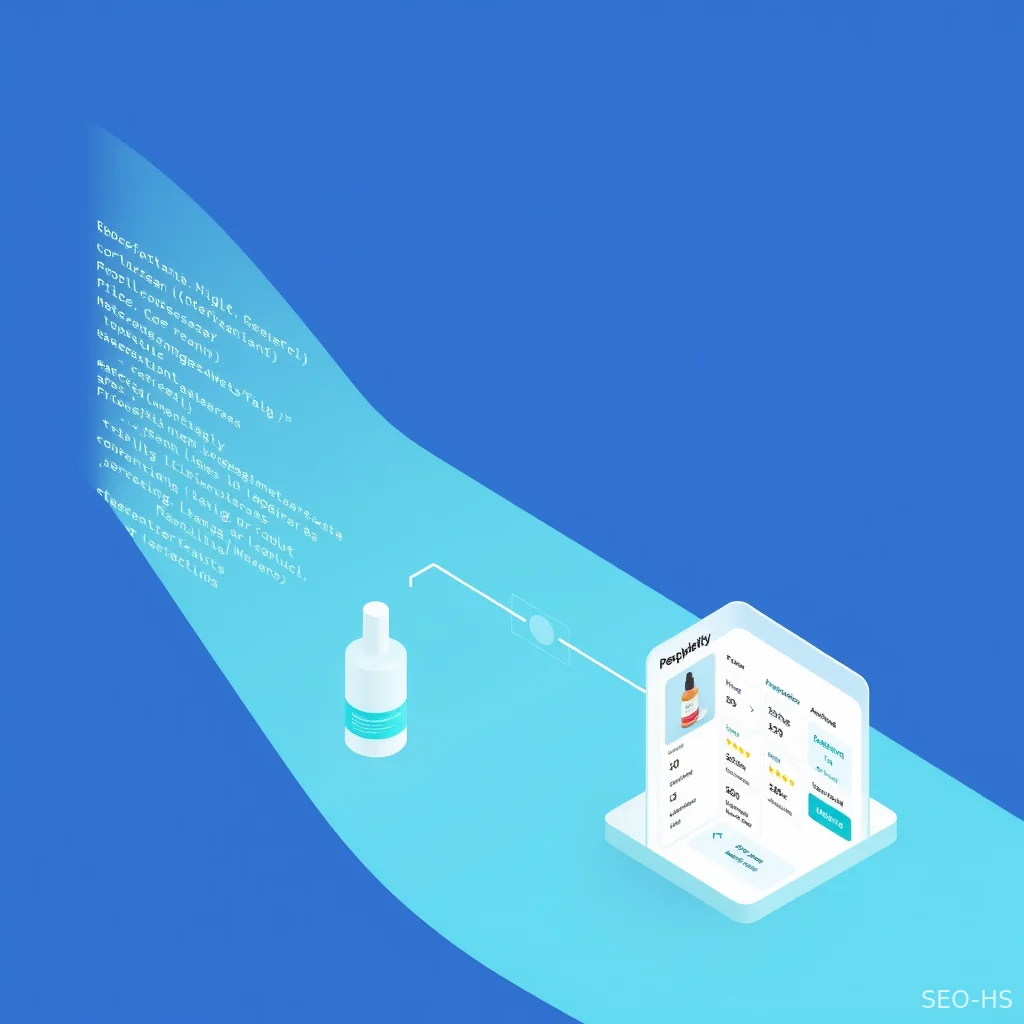
Product queries play by different rules than informational ones, and most platforms gloss over this distinction in their demos. When someone asks ChatGPT for the best cruelty-free moisturizer under forty dollars, the engine isn’t scanning blog posts for an answer - it’s pulling structured product data, review aggregates, and freshness signals to build a recommendation card, which means your product pages need to be quotable in a way your content pages never had to be. The platforms that actually move the needle here are the ones generating Product schema enriched with real-time price, availability, ratings, and FAQ data so an engine can safely cite a specific SKU instead of improvising from a poorly structured page. This is where the e-commerce sweet spot lives: comparison and review-synthesis queries where engines assemble side-by-side answers from review data, and a platform’s review-schema and ratings integration often determines whether you get cited at all.
The limitation worth naming upfront: even well-structured product data from a thin-content store can remain uncited because engines still gate on source trust - a fifty-SKU catalog traced through ChatGPT versus a Perplexity shopping query reveals platforms overpromising on citation guarantees they can’t control. ChatGPT’s citation pattern favors Wikipedia and established domains (approximately forty-eight percent of top citations per public analysis), while Perplexity cites primary sources directly and rewards recency. A platform that only optimizes for one engine’s preferences will leave you invisible on the others. This reality check leads straight into the integration question - because schema quality means nothing if the feed sync breaks every time you update a variant price.
Vendor demos frequently skip the live product-query test entirely - they’ll show a beautiful schema validator on a single product page but won’t run a live “compare X versus Y” query in Perplexity to prove the review data actually surfaces, and that gap is where small stores lose visibility without realizing it. Before committing, ask the vendor to run a live comparison query for your category in both ChatGPT and Perplexity during the demo, using your actual product data. If they cannot or will not, treat that as a signal that their review-schema integration is incomplete. The platforms that pass this test typically maintain direct review-feed partnerships or API access to major review platforms (Yotpo, Judge.me, Loox, Okendo) and can demonstrate the aggregateRating and review markup flowing through to the engine’s answer in real time.
“Shopify Integration” Means Three Different Things
“Native Shopify integration” is the most hollow phrase in this category - it covers three fundamentally different products wearing the same label. A real app with automatic product, price, and stock sync installs in minutes and keeps data current without developer involvement, but schema customization lives inside the platform’s sandbox and template coverage varies by theme. An API-level integration buys real control over variant-heavy catalogs, bundles, and review feeds, yet that control costs developer labor you should put in your scorecard, not in vendor marketing. Manual schema injection through theme edits works as a two-week stopgap, but it breaks on variants and gives you no monitoring, so treat it as a starting tactic, not a strategy.
Before you commit, check which integration type the vendor’s own case studies used - a Shopify store success story can hide hundreds of custom dev hours you’ll never see from a dashboard, and Shopify App Store reviews filtered to your plan tier often reveal the gap between marketing claims and merchant reality. For a founder-run store with no dedicated developer, the fastest way to waste money is a tool that cannot genuinely talk to your store at the variant level. App-based integration is the small-store default because it’s fast and keeps price and stock synced; API-level makes sense only if you have a developer on retainer or an agency partner who can maintain the mapping; manual injection should never be your long-term plan.
The integration type also determines your schema ownership. App-based platforms typically generate schema on their infrastructure and inject it via script tag - if you cancel, the schema disappears. API-level platforms often write schema to your theme files or a dedicated endpoint you control - you keep the output. Manual injection gives you full ownership but full maintenance burden. Ask the vendor: “If I cancel tomorrow, what schema artifacts do I keep, and in what format?” A platform that traps your structured data makes you a tenant, and tenants don’t negotiate renewal terms. This question alone eliminates vendors whose business model depends on data lock-in rather than ongoing value delivery.
A Weighted Scorecard You Can Run in a Live Demo
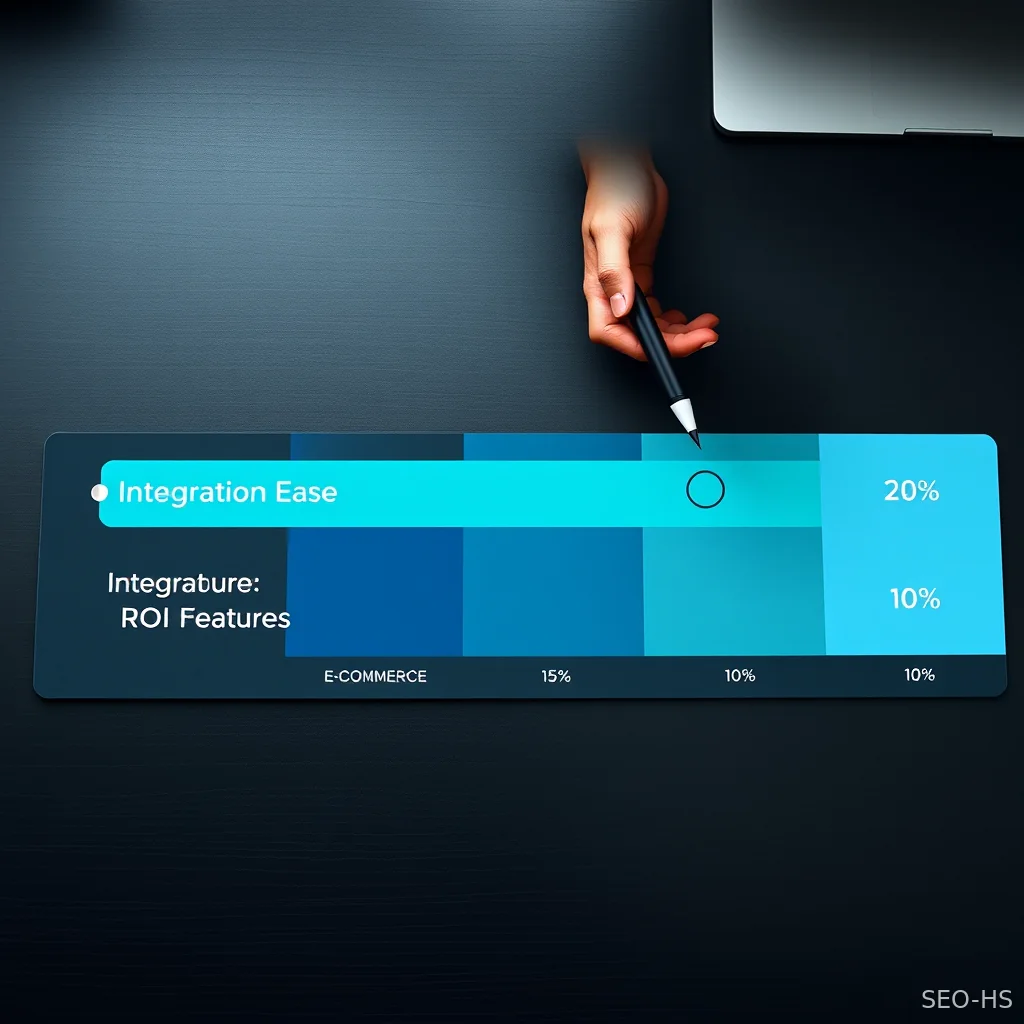
The scorecard that actually saves you money weights integration ease at thirty percent because most small stores have no dedicated developer and the fastest way to waste budget is a tool that cannot actually talk to Shopify - ROI proof takes twenty-five percent, e-commerce features twenty percent, price fifteen percent, and support ten percent. This order flips the usual vendor pitch which leads with features and buries integration depth, but the integration analysis above showed exactly why integration determines whether you launch in days or stall for months. If you have a developer on staff you can shift five points from integration to features, but for a founder-run store the weight stays where it is. Turn each weight into a live demo question instead of a checklist item: for integration, ask them to show the feed sync for variant SKUs and demonstrate what happens to schema when a price changes at midnight; for ROI proof, ask them to export a CSV showing AI-referred sessions tied to Shopify order IDs from a current customer; for features, ask them to generate Product schema with aggregateRating and FAQ markup for a bundle product; for price, demand complete public pricing with no contact-sales gate; for support, ask for their median response time on schema-validation errors during Black Friday.
Supplement the demo with Shopify App Store ratings filtered to your plan tier (for a five-hundred-SKU store, that’s typically the “Standard” or “Professional” tier), unfiltered threads from r/Shopify and r/ecommerce, and case studies from stores in your revenue band rather than enterprise logos that hide custom dev hours. These weights are this guide’s synthesis for small e-commerce, not a universal standard - a massive SKU catalog or an in-house dev team genuinely changes the math - and the pricing section below will show how per-SKU versus flat-fee versus per-session pricing can flip the winner depending entirely on where your store sits today. Rescore honestly before you run the thirty-minute evaluation ritual that closes this guide.
The scoring rubric maps each weight to measurable demo outcomes: integration (thirty points) = variant sync works live, price changes propagate in under one hour, schema validates on Google’s Rich Results Test; ROI proof (twenty-five points) = vendor shows GA4-separated AI traffic, Shopify order attribution, ninety-day cohort data from a similar-size store; features (twenty points) = Product schema with all required fields, review feed from your review platform, llms.txt generation, monitoring across four engines; price (fifteen points) = public pricing page, no per-API-call surprises, predictable twelve-month cost at your projected catalog size; support (ten points) = named support contact, SLA for schema errors, migration assistance if you leave. Score each candidate on a zero-to-ten scale per criterion, multiply by weight, sum - highest total wins, provided they clear a minimum threshold of seven on integration and ROI proof.
Pricing Models That Change With Your Catalog Size
Pricing pages that end in “contact sales” are the first red flag - they exist because the model only makes sense once you’re locked into a call. Flat fees look safe until you realize you’re paying enterprise rates for a five-hundred-SKU catalog; per-SKU pricing punishes variant-heavy stores the moment you add a new color or size; per-session or per-query models stay quiet until your traffic finally grows and the bill explodes exactly when you can least afford surprise costs. The same public rate that reads reasonable at five hundred SKUs becomes a thousand dollars a month at fifty thousand, and that curve tells you more than any feature comparison. Many vendors use tiered or volume-discount curves that change the math non-linearly - a tool at ten dollars per month for five hundred SKUs might hit eighty dollars at five thousand (not one hundred) and six hundred at fifty thousand (not one thousand) - so run the headline math before any demo using the vendor’s actual published tiers.
Take the vendor’s per-unit price and multiply it across your current catalog, then again at your twelve-month projection - hidden fees live in API call limits, monitoring frequency caps, support tier gates, and schema-validation quotas that never appear on the pricing page. Make “complete public pricing, no contact sales required” a non-negotiable line on your scorecard. The payback heuristic that keeps you honest: total cost including your hours and any developer time should reach identifiable AI-referred revenue within sixty to ninety days, based on observed payback periods for early-adopter stores in the five-hundred-to-five-thousand-SKU range - this is a heuristic, not a benchmark, since no independent study exists for AI-visibility-platform payback periods. If a vendor cannot sit down and model that math with real numbers from your store, discount their ROI claims accordingly.
That timeline pressure is exactly why the next ninety days need a concrete plan - quick wins first, full deployment second, and a clear owner for every step. The pricing model you choose should align with your growth trajectory: flat-fee favors stores expecting rapid SKU expansion; per-SKU favors stable catalogs with high per-product revenue; per-session favors stores with high traffic but low conversion who need to prove the channel first. Ask each vendor to model your twelve-month cost at three catalog sizes (current, 2x, 5x) and compare the curves - the platform with the flattest cost curve for your growth scenario often wins on total cost of ownership even if its headline price is higher.
Your First 90 Days: Quick Wins Then Full Deployment
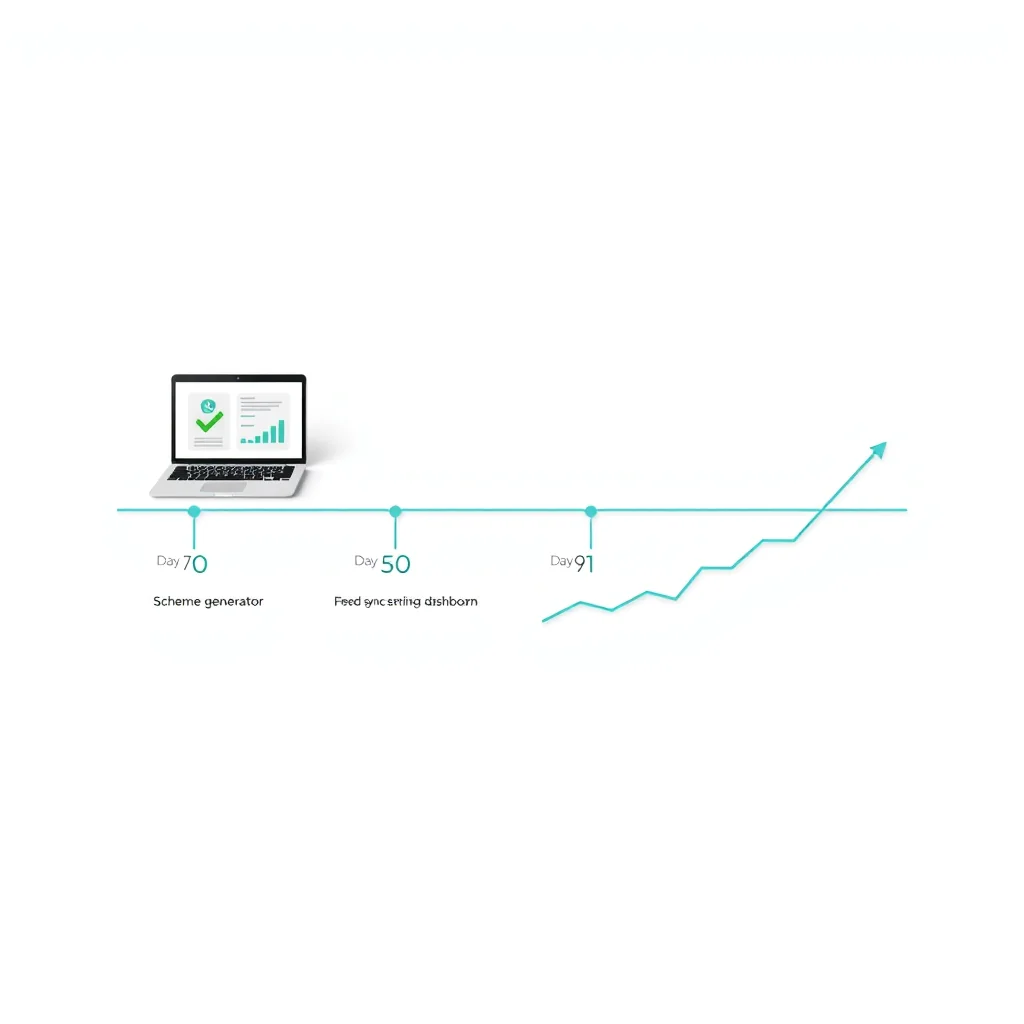
The timeline that actually works for a small store starts with two weeks of quick wins you can execute this afternoon - generate product schema with our free AEO schema generator, create an llms.txt file with our llms.txt generator, and patch the schema gaps on your ten highest-revenue product pages. Full deployment with live feed sync, review aggregation, monitoring across ChatGPT and Perplexity, and the first iteration cycle lands around day sixty to ninety, not week two. Roles stay clean when the integration type is honest: you own vendor selection and the revenue target, a developer or agency handles API mapping and schema validation only if you chose an API-level integration, and the platform automates the rest - if the realistic setup asks more than ten hours of your team (a heuristic based on typical founder capacity for a five-person operation, not a studied threshold), that labor cost belongs in the scorecard next to the subscription price, because a tool that demands a part-time engineer isn’t a platform for a five-person operation.
True no-code on Shopify looks like: install the app, confirm theme compatibility, preview the generated schema on a live product page, and flip on monitoring - a non-technical founder can genuinely manage this when the integration is app-based rather than API- or manual-based. The first measurable AI referrals typically appear in weeks five to eight (an observed range from early-adopter stores, not a guaranteed timeline, with variance depending on niche competition and engine crawl frequency), so judge a platform on setup quality and a thirty-day demo, not on instant traffic. During weeks three to six, your focus should be validating that variant-level price and stock changes propagate correctly, that review aggregates update when new reviews arrive, and that the monitoring dashboard shows citations for your target discovery queries.
By day ninety, you should have: a stable feed sync with zero manual interventions for two weeks, review schema live on at least eighty percent of your catalog, monitoring alerts configured for your top twenty discovery queries, and a baseline AI-referred revenue number in GA4 separated from organic. If any of these four milestones are missing, the platform is not delivering on its core jobs - trigger the thirty-day cancellation clause you negotiated (see the evaluation ritual below) and move to your second-choice candidate. The cost of a failed ninety-day trial is one month of subscription plus setup hours; the cost of staying on a non-performing platform for a year is the compounding citation gap plus the full annual contract.
Control, Portability, and Future-Proofing
Here’s the part no demo mentions: the AI speaks for your brand daily, and platforms differ wildly in how much you control it. Some let you set tone, block prohibited claims, and rule on competitor comparisons; others push raw product data into the engine with no guardrails. A tool that sounds perfect may have no answer for what the AI says about your return policy - the answer comes from whatever the schema holds, and if you cannot override it, you’ve ceded brand voice to the platform. Ask for a live demonstration of the content-control layer: can you suppress a specific claim? Can you inject a brand-voice directive? Can you block competitor comparisons entirely? If the answer is “that’s on the roadmap,” treat it as absent.
Then there’s the exit question, which is really an ownership question. Your schema, your llms.txt, and your analytics history should all be exportable the day you cancel - read the data-portability and schema-ownership clauses before you read the pricing page. A platform that traps your structured data makes you a tenant, and tenants don’t negotiate renewal terms. Future-proofing lives on the roadmap: ask how often the platform updates for ChatGPT, Perplexity, Claude, and Gemini, and whether it has a process for entirely new engines, because a tool built for one engine ages fast. Public changelog frequency is a plausible churn signal (platforms that ship weekly engine-adaptation updates tend to retain customers), though reliable twelve-month churn data for small e-commerce isn’t public, so a data-export guarantee and a trial clause are your real safety net.
The platforms that survive the coming consolidation will be the ones that treat engine diversity as a first-class concern - not just “we support ChatGPT” but “here’s how we adapt when Perplexity changes its citation algorithm” with a documented response time. Ask for their last three engine-adaptation releases: what changed, how fast they shipped, and whether existing customers needed to take action. A vendor that cannot name specific engine changes they’ve adapted to in the past ninety days is not maintaining parity with the ecosystem. Your visibility depends on their ability to move faster than the engines do - make that a scored criterion in your evaluation.
A 30-Minute Evaluation Ritual Before You Sign Any Annual Contract
Run your top three candidates through identical tests using the same fifty-SKU catalog and the same live queries in ChatGPT and Perplexity because a controlled comparison always beats a slide deck - load variant SKUs into each feed, validate the generated schema on a sample product page, run one real product question, export the analytics to prove the data is not trapped, and confirm a cancel-within-thirty-days clause in writing before any money moves. Push for a shared ROI definition right in the demo - referrals, clicks, sessions, or attributed revenue - because a vendor that cannot separate AI-referred revenue from organic in GA4 or Shopify Analytics is signaling they have not built for measurement. In practice, every strong platform excels at exactly one of the five jobs (schema, feed sync, page optimization, monitoring, or measurement) so the winner is the tool that covers your weakest job, not the one with the longest feature list.
A variant-sync stress test exposes gaps no slide deck addresses: create a product with five variants, change the price on one variant at midnight, and verify the schema reflects the new price by morning on both Google’s Rich Results Test and a live Perplexity query. If the vendor’s sales engineer cannot explain a sync failure on the spot, that gap will cost you thousands in annual spend and months of lost citations. Build your scorecard from the weights in this guide, generate schema and an llms.txt file with our free AEO schema generator and llms.txt generator for quick wins while you decide, then run this thirty-minute ritual on your shortlist before you sign anything.
The ritual checklist fits on one screen: (1) variant sync test - price change propagates in under sixty minutes; (2) schema validation - Google Rich Results Test passes on three random product pages; (3) live query test - your product appears in a Perplexity comparison for your target category; (4) data export - full analytics CSV downloads without support ticket; (5) cancellation clause - thirty-day opt-out in writing; (6) ROI definition - vendor maps AI referrals to Shopify order IDs in GA4. Score each candidate zero to ten on each item, apply your weights, and the highest total that clears the integration and ROI minimums gets the contract. No vendor passes all six perfectly - the one that fails least on your weakest job wins.
Frequently Asked Questions
The five jobs are: generating and validating product schema, syncing catalog and review data into AI-readable feeds, optimizing product pages so engines can cite them, monitoring brand appearances across ChatGPT, Perplexity, Gemini, and Claude, and measuring AI-referred sessions and revenue. Most platforms excel at only one job, so match the tool to your weakest area rather than chasing the longest feature list.
App-based integration installs in minutes and auto-syncs products, prices, and stock but keeps schema on the vendor’s infrastructure - cancel and it disappears. API-level gives you variant-level control and schema ownership but requires developer labor. Manual schema injection through theme edits works as a two-week stopgap but breaks on variants and offers no monitoring. Ask vendors which type their case studies actually used.
Weight integration ease at 30% (variant sync works live, price changes propagate in under an hour), ROI proof at 25% (vendor shows GA4-separated AI traffic tied to Shopify order IDs), e-commerce features at 20% (Product schema with aggregateRating, review feed, llms.txt, four-engine monitoring), price at 15% (public pricing, no per-API-call surprises), and support at 10% (named contact, SLA for schema errors, migration assistance). Score each candidate 0 - 10 per criterion, multiply by weight, and require a minimum of 7 on integration and ROI proof.
Per-SKU pricing punishes variant-heavy stores the moment you add a new color or size. Flat fees look safe until you realize you’re paying enterprise rates for a 500-SKU catalog. Per-session models stay quiet until traffic grows and the bill explodes. Many vendors use tiered curves that change non-linearly - a tool at $10/month for 500 SKUs might hit $80 at 5,000 (not $100) and $600 at 50,000 (not $1,000). Run the math at your current, 2x, and 5x catalog sizes before any demo.
Generate Product schema with a free AEO schema generator, create an llms.txt file with a free llms.txt generator, and patch schema gaps on your ten highest-revenue product pages. These steps make your products machine-readable for AI engines immediately while you evaluate platforms. The first measurable AI referrals typically appear in weeks five to eight, so judge platforms on setup quality and a 30-day demo, not instant traffic.
Days 0 - 14: quick wins (schema, llms.txt, top-10 product pages). Days 15 - 60: live feed sync, review aggregation, monitoring across ChatGPT and Perplexity, validate variant-level price and stock propagation. Day 90: stable feed sync with zero manual interventions for two weeks, review schema on 80%+ of catalog, monitoring alerts for top 20 discovery queries, baseline AI-referred revenue in GA4 separated from organic. If any milestone is missing, trigger the 30-day cancellation clause and move to your second choice.
Ask for a live demo of the content-control layer: can you suppress a specific claim, inject a brand-voice directive, or block competitor comparisons entirely? If the answer is “that’s on the roadmap,” treat it as absent. Some platforms push raw product data into engines with no guardrails - you’ve ceded brand voice if you cannot override what the AI says about your return policy or prohibited claims.
Your schema, llms.txt, and analytics history must be exportable the day you cancel - read the data-portability and schema-ownership clauses before the pricing page. App-based platforms typically generate schema on their infrastructure and inject it via script tag; if you cancel, the schema disappears. API-level platforms often write schema to your theme files or a dedicated endpoint you control. Ask: “If I cancel tomorrow, what schema artifacts do I keep, and in what format?”
Test your top three candidates with the same 50-SKU catalog and live queries in ChatGPT and Perplexity: (1) variant sync test - price change propagates in under 60 minutes; (2) schema validation - Google Rich Results Test passes on three random product pages; (3) live query test - your product appears in a Perplexity comparison for your target category; (4) data export - full analytics CSV downloads without a support ticket; (5) cancellation clause - 30-day opt-out in writing; (6) ROI definition - vendor maps AI referrals to Shopify order IDs in GA4. Score each 0 - 10, apply your weights, highest total that clears integration and ROI minimums wins.
When someone asks for the best cruelty-free moisturizer under $40, the engine isn’t scanning blog posts - it’s pulling structured product data, review aggregates, and freshness signals to build a recommendation card. Your product pages need Product schema enriched with real-time price, availability, ratings, and FAQ data so an engine can safely cite a specific SKU. Platforms with direct review-feed partnerships (Yotpo, Judge.me, Loox, Okendo) that demonstrate aggregateRating flowing to the engine in real time win on comparison queries where review schema decides who gets cited.
Frequently Asked Questions
The five jobs are: generating and validating product schema, syncing catalog and review data into AI-readable feeds, optimizing product pages so engines can cite them, monitoring brand appearances across ChatGPT, Perplexity, Gemini, and Claude, and measuring AI-referred sessions and revenue. Most platforms excel at only one job, so match the tool to your weakest area rather than chasing the longest feature list.
App-based integration installs in minutes and auto-syncs products, prices, and stock but keeps schema on the vendor’s infrastructure - cancel and it disappears. API-level gives you variant-level control and schema ownership but requires developer labor. Manual schema injection through theme edits works as a two-week stopgap but breaks on variants and offers no monitoring. Ask vendors which type their case studies actually used.
Weight integration ease at 30% (variant sync works live, price changes propagate in under an hour), ROI proof at 25% (vendor shows GA4-separated AI traffic tied to Shopify order IDs), e-commerce features at 20% (Product schema with aggregateRating, review feed, llms.txt, four-engine monitoring), price at 15% (public pricing, no per-API-call surprises), and support at 10% (named contact, SLA for schema errors, migration assistance). Score each candidate 0 - 10 per criterion, multiply by weight, and require a minimum of 7 on integration and ROI proof.
Per-SKU pricing punishes variant-heavy stores the moment you add a new color or size. Flat fees look safe until you realize you’re paying enterprise rates for a 500-SKU catalog. Per-session models stay quiet until traffic grows and the bill explodes. Many vendors use tiered curves that change non-linearly - a tool at $10/month for 500 SKUs might hit $80 at 5,000 (not $100) and $600 at 50,000 (not $1,000). Run the math at your current, 2x, and 5x catalog sizes before any demo.
Generate Product schema with a free AEO schema generator, create an llms.txt file with a free llms.txt generator, and patch schema gaps on your ten highest-revenue product pages. These steps make your products machine-readable for AI engines immediately while you evaluate platforms. The first measurable AI referrals typically appear in weeks five to eight, so judge platforms on setup quality and a 30-day demo, not instant traffic.
Days 0 - 14: quick wins (schema, llms.txt, top-10 product pages). Days 15 - 60: live feed sync, review aggregation, monitoring across ChatGPT and Perplexity, validate variant-level price and stock propagation. Day 90: stable feed sync with zero manual interventions for two weeks, review schema on 80%+ of catalog, monitoring alerts for top 20 discovery queries, baseline AI-referred revenue in GA4 separated from organic. If any milestone is missing, trigger the 30-day cancellation clause and move to your second choice.
Ask for a live demo of the content-control layer: can you suppress a specific claim, inject a brand-voice directive, or block competitor comparisons entirely? If the answer is “that’s on the roadmap,” treat it as absent. Some platforms push raw product data into engines with no guardrails - you’ve ceded brand voice if you cannot override what the AI says about your return policy or prohibited claims.
Your schema, llms.txt, and analytics history must be exportable the day you cancel - read the data-portability and schema-ownership clauses before the pricing page. App-based platforms typically generate schema on their infrastructure and inject it via script tag; if you cancel, the schema disappears. API-level platforms often write schema to your theme files or a dedicated endpoint you control. Ask: “If I cancel tomorrow, what schema artifacts do I keep, and in what format?”
Test your top three candidates with the same 50-SKU catalog and live queries in ChatGPT and Perplexity: (1) variant sync test - price change propagates in under 60 minutes; (2) schema validation - Google Rich Results Test passes on three random product pages; (3) live query test - your product appears in a Perplexity comparison for your target category; (4) data export - full analytics CSV downloads without a support ticket; (5) cancellation clause - 30-day opt-out in writing; (6) ROI definition - vendor maps AI referrals to Shopify order IDs in GA4. Score each 0 - 10, apply your weights, highest total that clears integration and ROI minimums wins.
When someone asks for the best cruelty-free moisturizer under $40, the engine isn’t scanning blog posts - it’s pulling structured product data, review aggregates, and freshness signals to build a recommendation card. Your product pages need Product schema enriched with real-time price, availability, ratings, and FAQ data so an engine can safely cite a specific SKU. Platforms with direct review-feed partnerships (Yotpo, Judge.me, Loox, Okendo) that demonstrate aggregateRating flowing to the engine in real time win on comparison queries where review schema decides who gets cited.
Related Articles